Why Do Childhood Trauma Survivors Struggle with Attachment Styles?
Childhood trauma does not only affect memories or emotions—it shapes how a person learns to connect with others.

One of the most important frameworks for understanding this is attachment theory, which explains how early relationships with caregivers form the blueprint for adult relationships and emotional safety.
When childhood experiences include abuse, neglect, inconsistency, or lacks emotional safety, childhood trauma attachment styles can develop as adaptive survival responses. These patterns help a child manage overwhelming or unpredictable environments at the time, but they can become challenging in adulthood.
These are not personality flaws. They are nervous system adaptations to early relational environments that once required protection, not understanding.
What are attachment styles in childhood trauma?
Attachment styles describe the way we form emotional bonds, regulate closeness, and respond to perceived relational threat.
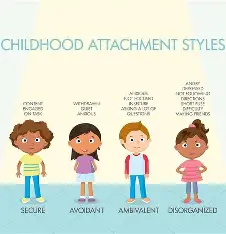
In trauma survivors, attachment is often not “secure” but instead falls into patterns such as:
Anxious attachment
Avoidant attachment
Fearful-avoidant (disorganised) attachment
These patterns are deeply linked to childhood experiences of safety, responsiveness, and emotional availability.
How Childhood Trauma Shapes Attachment Development
Children depend on caregivers for safety, comfort, and regulation.
When caregivers are:
abusive
emotionally unavailable
inconsistent
frightening
or themselves overwhelmed
…the child is forced to adapt.
This creates a core internal conflict:
“I need connection to survive” but “Connection does not feel safe”
This conflict becomes the foundation of adult relational patterns.
Anxious Attachment and Childhood Trauma
Anxious attachment often develops when caregiving is inconsistent.
A child learns:
sometimes connection is available
sometimes it is withdrawn without explanation
As an adult, this can look like:
Fear of abandonment
Overthinking relationships
Seeking constant reassurance
Difficulty tolerating distance or silence
Feeling “too much” in relationships
Underneath anxious attachment is often a deep fear:
“If I am not close enough, I will lose the relationship.”
This is not neediness—it is a survival strategy built from unpredictability.
Avoidant Attachment and Childhood Trauma
Avoidant attachment often develops when emotional needs are consistently dismissed or unmet.
A child learns:
relying on others is unsafe or ineffective
emotional expression leads to rejection or shame
As an adult, this may look like:
Difficulty trusting others
Emotional withdrawal
Strong independence
Discomfort with vulnerability
Minimising emotional needs
Underneath avoidant attachment is often the belief:
“I can only rely on myself.”
This is not emotional coldness—it is protection from past disappointment or harm.
Fearful-Avoidant (Disorganised) Attachment
This pattern is often linked to more complex or frightening relational trauma, including abuse.
The caregiver is both:
a source of connection
and a source of fear
This creates a contradictory internal system:
Wanting closeness
Fearing closeness at the same time
In adulthood, this may appear as:
Intense relationships that become overwhelming
Push-pull dynamics
Emotional confusion in intimacy
Difficulty trusting even safe partners
Rapid shifts between closeness and withdrawal
This is often one of the most confusing attachment patterns for survivors.
Why These Patterns Persist into Adulthood
Attachment patterns are stored not just in memory, but in the nervous system.
This means they are automatically activated in relationships, especially when:

intimacy increases
conflict occurs
emotional vulnerability is required
or separation is perceived
Even when someone intellectually understands they are safe, the body may still respond as if danger is present.
👉Related reading:
The Nervous System Role in Attachment
Attachment is regulated by the autonomic nervous system.
When threat is perceived, the system may shift into:
fight (conflict, defensiveness)
flight (avoidance, withdrawal)
freeze (shutdown, dissociation)
fawn (people-pleasing, appeasement)
These responses directly shape how attachment patterns are experienced in real relationships.
Why Relationships Often Feel So Difficult After Trauma
Relationships activate the exact systems shaped in childhood:
trust
vulnerability
dependence
emotional safety
This is why survivors often describe relationships as:
confusing
overwhelming
unstable
or emotionally exhausting
It is not because they are “bad at relationships”—it is because relationships activate old survival learning.
👉 Related reading:
Can Attachment Patterns Change?

Yes.
Attachment patterns are not fixed identities—they are adaptive survival systems.
With trauma-informed support, the nervous system can learn:
emotional safety in relationships
regulation during closeness and conflict
trust without hypervigilance
boundaries without disconnection
Healing often involves repeated experiences of:
safety
consistency
emotional regulation
and corrective relational experiences
You Are Not Stuck with One Pattern
Many people do not fit neatly into one attachment style.
It is common to move between:
anxious in one relationship
avoidant in another
fearful under stress
This flexibility shows that attachment is responsive—not fixed.
Frequently Asked Questions About Attachment Styles and Childhood Trauma
Can childhood trauma affect attachment styles?
Yes. Childhood trauma can significantly impact how attachment styles develop. When caregivers are inconsistent, emotionally unavailable, abusive, or frightening, a child may develop survival-based attachment patterns such as anxious, avoidant, or fearful-avoidant attachment.
Are attachment styles a personality trait or a trauma response?
Attachment styles are not fixed personality traits. From a trauma-informed perspective, they are adaptive nervous system responses shaped by early relational experiences. They reflect how a person learned to stay safe in relationships during childhood.
Can attachment styles change in adulthood?
Yes. Attachment patterns are flexible and can change over time. With safe, consistent relationships and trauma-informed support, the nervous system can learn new patterns of emotional safety, regulation, and trust.
Why do I feel anxious or distant in relationships?
These reactions are often linked to attachment adaptations formed in childhood. Anxiety in relationships may reflect fear of abandonment, while emotional distance may reflect protection from past emotional pain or rejection.
What is the most common attachment style in trauma survivors?
There is no single “most common” style, but anxious, avoidant, and fearful-avoidant (disorganised) attachment patterns are all commonly associated with childhood trauma, especially when experiences involved inconsistency, neglect, or abuse.
Can therapy help with attachment issues?
Yes. Trauma-informed therapy can help you understand attachment patterns, regulate emotional responses, and develop safer relational experiences over time. Healing often involves building trust, safety, and emotional regulation within relationships.
Support for Attachment and Relationship Patterns
If you recognise yourself in these attachment patterns, it may reflect early relational experiences that shaped how your nervous system learned to experience safety, closeness, and connection.
Trauma-informed counselling can help you understand these responses, reduce emotional reactivity in relationships, and develop more secure and stable relational patterns over time.
At Sexual Trauma Counselling Perth, I work with adolescents and adults experiencing the impacts of childhood trauma, complex trauma, attachment difficulties, and relationship challenges.
Sessions are available in Perth and via telehealth across Australia.
👉 If you would like support, you can contact Sexual Trauma Counselling Perth to learn more about trauma-informed counselling and attachment-related healing.
👉 Related service pages:


Comments